
Whoa!
Wallets are weirdly intimate these days.
They hold money, identity, and access to apps that can move your life in seconds.
At first glance a browser extension wallet looks like a tiny convenience — click, approve, done — but underneath that simplicity live lots of tradeoffs you can’t ignore, especially if you’re active in DeFi.
My instinct said “it’s fine” for a long time, though actually, wait — let me rephrase that: I used them casually and learned the hard way why design decisions matter.
Seriously?
Yes.
Extensions live in the place you browse from, which makes them convenient and dangerous at the same time.
On one hand you want fast interactions with DEXs, NFT marketplaces, and yield aggregators; on the other hand your browser is the single surface area attackers target constantly, and some browsers leak more than others when permissions are sloppy, which is somethin’ that bugs me.
Initially I thought browser wallets were mostly interchangeable, but after testing several I realized the differences in threat models and UX add up quickly.
Here’s the thing.
You should judge a wallet by three layers: cryptography, UX safety features, and ecosystem hygiene.
Cryptography is the baseline — secure key derivation, hardware-wallet support, and robust seed handling — while UX safety features are what stop you from approving a bad transaction in a hurry, and ecosystem hygiene is about whether the team responds to bugs and audits their code.
If any one of those layers is weak, attacks become plausible; and though many wallets boast “security,” the claim means little without that three-layer view.
Hmm… some wallets scream security but are tiny closed-source projects, and that combination always set off my gut feeling.
Short checklist time.
Does the extension isolate its vault from web pages?
Can it connect to a hardware wallet like Ledger or Trezor?
Is the code open to review and has it been audited recently by reputable firms?
Those are the quick yes/no filters I use before digging deeper.
How I evaluate safety features (practical, not buzzword-eyed)
Wow!
Don’t be dazzled by marketing terms like “bank-grade” or “military-grade encryption.”
Focus on features that actually reduce your attack surface: transaction simulation, per-site permission management, phishing detection, and separate signing UI that makes it obvious what you’re approving.
One of my favorite practical checks is to create a throwaway account, connect it to a risky site, and see whether the wallet clearly shows the destination address, the token type, and the approval scope without hiding details behind jargon; if it doesn’t, move on.
On the technical side, wallets that support transaction simulation (showing estimated post-execution balances and calldata decoding) save you from many common DeFi traps, which matters when gas fees make mistakes expensive.
Hmm… this part bugs me.
Extensions that request blanket permissions like “read and change all your data on all websites” should be avoided unless there’s a very good reason.
Better wallets ask for scoped access, like “connect to the current site only” and give you granular controls you can revoke.
My experience tells me that permission hygiene is as important as seed safety because browser-based attacks often escalate via sloppy permissions.
I’m biased, but I prefer wallets that make revoking access quick and obvious.
Something felt off about UI-only security.
A secure-seeming interface doesn’t guarantee cryptographic safety, and vice versa.
Actually, wait—let me rephrase that: you need both.
For instance, a wallet might be open source and sign keys only locally, but if its UI hides transaction details and makes it trivial to approve ERC-20 approvals with unlimited allowance, you’ll get burned sooner or later.
User experience needs to enforce good security practices, not merely illustrate them.
On the note of approvals: short story, don’t give blanket allowances.
Really.
Approve exact amounts when possible.
Some wallets help by defaulting to exact approvals or by showing the allowance window plainly; that’s a small UX win that prevents many rug pulls and drain attacks in DeFi.
If the wallet doesn’t nudge you in that direction, it’s not thinking like a DeFi user yet.
Okay, so checklists are good.
But what about recovery and backups?
Recovery is where many people get casual and then panic — seed phrases stored in plain text, digital photos of seeds, or weird cloud backups that are not encrypted properly.
A wallet’s recovery flow should be straightforward: deterministic seed with clear backup instructions, optional encrypted cloud backup with a user-held passphrase, and clear warnings about phishing attempts to “help” recover your seed.
I once had a friend nearly hand his seed phrase over to a fake support agent; if a wallet provides a live support channel, it must also teach users not to share secrets, which oddly enough few do well.
On the subject of support: vendors who engage publicly — with bug bounties, audits, and transparent release notes — create trust.
Trust, though, is not the same as safety.
Trust gets you a starting point; technical proof (audits, reproducible builds, community reviews) closes the loop.
When a team actively responds to vulnerability reports and publishes mitigations, that means they understand the adversary model, which is comforting in a space where new exploits show up every quarter.
I’m not 100% sure any system is unhackable, but teams that treat security as ongoing work are the ones I’d choose to rely on.
Okay, so which wallets pass these checks in practice?
I won’t list every option — and I’m not trying to be exhaustive — but if you want a wallet that prioritizes DeFi flows while keeping safety central, test it against the list above.
For people ready to try something opinionated about safety, consider wallets that offer transaction simulation, hardware wallet bridging, and strong permission controls.
For a practical first-run, I installed and used one of the newer, developer-friendly wallets and appreciated how it paused suspicious approvals and explained calldata without condescension.
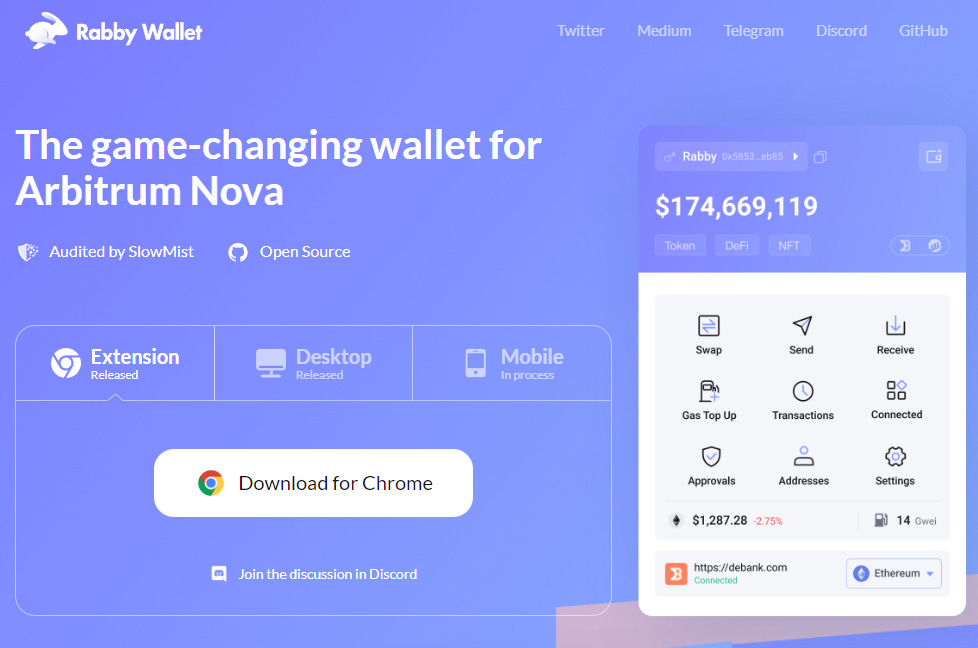
If you’d like to try that wallet directly, here’s a place to start with a clean installer: rabby wallet download.
Hmm… I’m aware that naming one link feels like an endorsement, and I want to be transparent: I’m biased toward wallets that ship features helpful to DeFi users.
That includes multi-account support, chain switching safety, and the ability to test transactions on a testnet first, which teaches you what will happen.
My experience shows that a brief habit of “simulate then send” prevents many costly mistakes, and wallets that make simulation hard are less friendly to real-world trading.
On the flip side, simpler wallets may feel safer to newcomers because they’re minimal, but minimal can also mean missing protections you need when you step into complex DeFi products, so choose deliberately.
Something to think about when you pick your daily driver.
One practical routine I recommend.
Lock your wallet when you’re done using it.
Re-check permissions weekly and revoke any dapps you don’t use.
Keep a small hot wallet for day-to-day swaps and a cold or hardware-backed wallet for long-term holdings; this separation reduces risk and is realistic for US users who also like convenience.
I do this myself — it’s low friction and it saves sleepless nights.
FAQ
How do I know if an extension wallet is safe enough for DeFi?
Look for open-source code, recent audits, hardware wallet support, transaction simulation, and scoped permissions.
Also check that the team publishes clear release notes and has a bug bounty or public security policy; those factors combined indicate an active security posture rather than a one-time checklist.
Can I use multiple wallets to reduce risk?
Yes.
Using a small hot wallet for frequent trades and a separate cold or hardware-backed wallet for savings is a pragmatic approach.
This split helps limit exposure to phishing, compromised devices, or accidental approvals, and it’s a pattern many experienced DeFi users follow.